Enhance your property with expert brickwork and traditional flint masonry designed for lasting durability and timeless character. Whether you are constructing a new build, restoring a heritage property, or adding decorative garden walls, we combine traditional craftsmanship with modern techniques to deliver exceptional results.
What We Do
- Traditional Flint Wall Construction & Restoration: Specialist fitting, repointing, and restoration of knapped and random flintwork, preserving authentic regional architecture.
- New Brickwork & Extensions: Expert structural bricklaying for house extensions, new builds, garages, and structural partition walls.
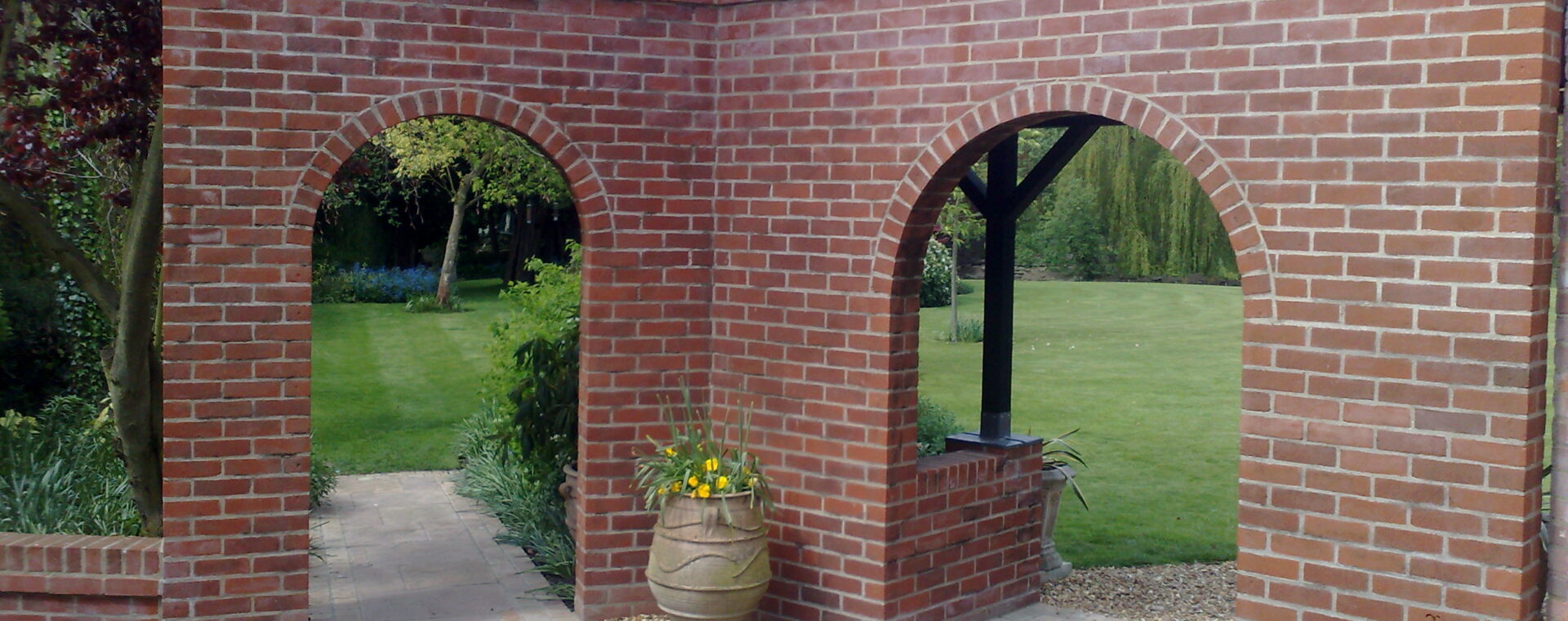
- Garden & Retaining Walls: Custom brick and stone garden walls, boundary wall construction, and retaining structures built for strength and longevity.
- Repointing & Structural Repairs: Professional lime and cement repointing, brick replacement, and structural repairs to protect and rejuvenate ageing masonry.
Why Choose Us
- Heritage & Period Property Expertise: Skilled in matching historical mortar mixes, brick types, and traditional flint techniques to seamlessly blend with existing structures.
- Superior Durability: Built using weather-resistant materials and precise structural standards to withstand the elements for decades.
- Meticulous Finish: Neat, consistent mortar lines and careful material selection ensure a high-end, aesthetically pleasing finish every time.
Repointing and flintwork: how a job usually goes
Masonry work starts with a close look at the wall: which bricks or flints are loose, where the joints have washed out, and why. Often the cause is a leaking gutter or downpipe, and Historic England’s repointing guidance notes that a whole wall rarely needs doing. Sound old mortar is best left alone.
Then comes the mortar. Older solid walls, and nearly every flint wall, were laid in lime, which is softer and more porous than the masonry around it, so damp dries out through the joints and the mortar wears instead of the brick. Hard cement pointing holds moisture in, and frost and salts then attack the brick faces. Flint walls carry a high proportion of mortar to stone, so the mix matters even more.
Gault brick and flint: the local vernacular
Gault clay fires to a pale buff or cream brick, and flint from the chalk went into cottages, churches and garden walls, laid rough or knapped to show a dark flat face.
In Soham, gault brick fronts sit beside flint side and rear walls; Burwell made its own buff gault bricks, known as Burwell whites; and the cottages next to Syde House in Saxon Street are flint with gault brick dressings. St Andrew’s Church in Cherry Hinton is flint, clunch and Barnack stone, and Isleham has Victorian kilns that burnt clunch for lime mortar.
Walls, consent and the rules that apply
- New and altered walls: permitted development allows a wall, fence or gate up to 1 metre high next to a road used by vehicles or its footpath, and 2 metres elsewhere. Those rights do not cover a listed building or its curtilage, and an Article 4 direction or planning condition can remove them.
- Demolition in a conservation area: removing a wall, gate or fence needs planning permission if it is 1 metre or more high next to a highway, footpath, bridleway, waterway or open space, or 2 metres or more elsewhere.
- Listed buildings: consent is needed for demolition or for alterations affecting the building’s special character, and listing can extend to curtilage walls that existed before 1 July 1948. Working without consent is a criminal offence, and a change of mortar or pointing style can count as an alteration.
- Party walls: a new wall on or astride a boundary, or work on a shared garden wall, can bring in the notice procedures of the Party Wall etc. Act 1996.
Which of these touches your wall depends on the site, so ask your council’s planning team before work is booked.
Brickwork in our projects
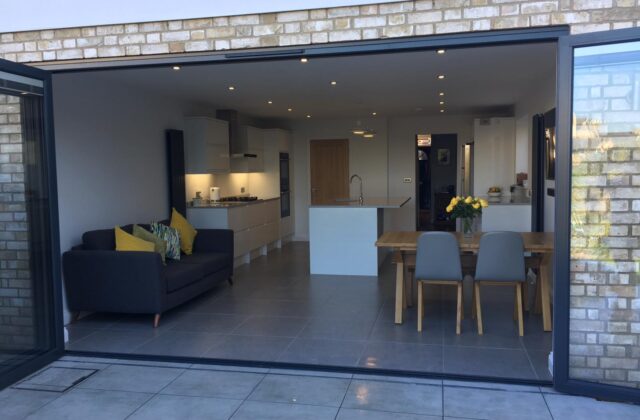
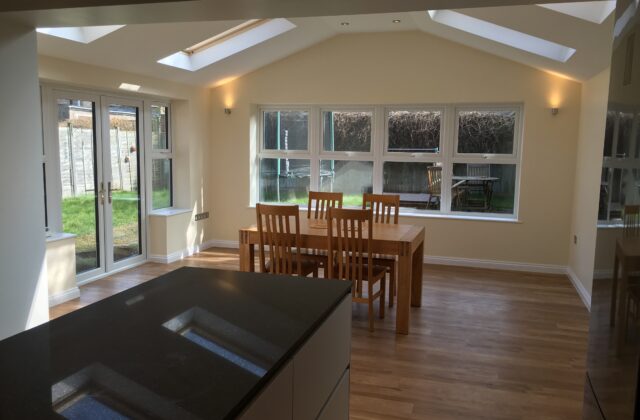
On our double-storey Caxton extension, new red brick was tied into the original house, with retaining walls around a sandstone patio. The Cambridge extension and kitchen matched the existing house using a two-tone brick pattern under a tiled gable roof. In Royston, the two-storey rear extension combines white painted render on the upper floor with traditional brickwork finishes.
Where we build and repair walls
We build and repair walls across the Cambridge and Newmarket area, including Cambridge, Caxton, Royston, Soham, Burwell, Isleham, Swaffham Prior and Saxon Street. Walls are often part of a bigger job: see our extensions page, or property maintenance for smaller repairs.
Brickwork and repointing questions
How can I tell if a wall needs repointing?
Look for joints worn back well behind the brick face, mortar you can rub out with a finger, gaps around loose bricks or flints, and plants rooting in the wall. Damp patches inside a solid wall can be another sign, though gutters or high ground levels can cause them too.
Can old cement pointing be taken out of a brick or flint wall?
Usually, but it takes patience. Cement is often harder than the brick around it, so careless cutting chips the brick edges and widens the joints, which is why hand tools are generally preferred over grinders. Once the joints are clean and damped, they can be repointed in a lime mortar suited to the wall.
What affects the cost of brickwork, flint or repointing?
The area and height of the wall come first, since scaffolding adds to any job. Then there is how hard the old mortar is to remove, whether matching bricks or flints must be sourced, the mortar specified, and the state of the wall and its footings.