Caxton grew up on a Roman road. Ermine Street, now the A1198, runs straight through the village, and for centuries the place made its living from the traffic on it: the market was held beside the road, and the Crown and the George were built there to serve travellers. Parts of the Crown date from the 15th century. Since the bypass opened in 2004 the old road is a lot quieter, but the village still reads as a line of buildings strung along that one historic route, with St Andrew’s Church set back along Gransden Road.
A&F Building Services already has a finished project in Caxton, described below. Below is what we think matters if you are planning work here.
A double-storey extension we built in Caxton
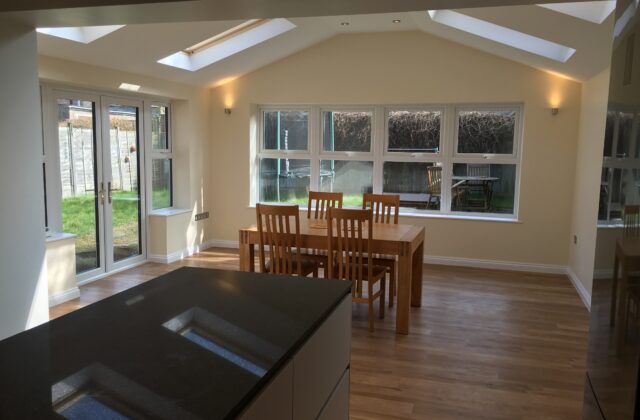
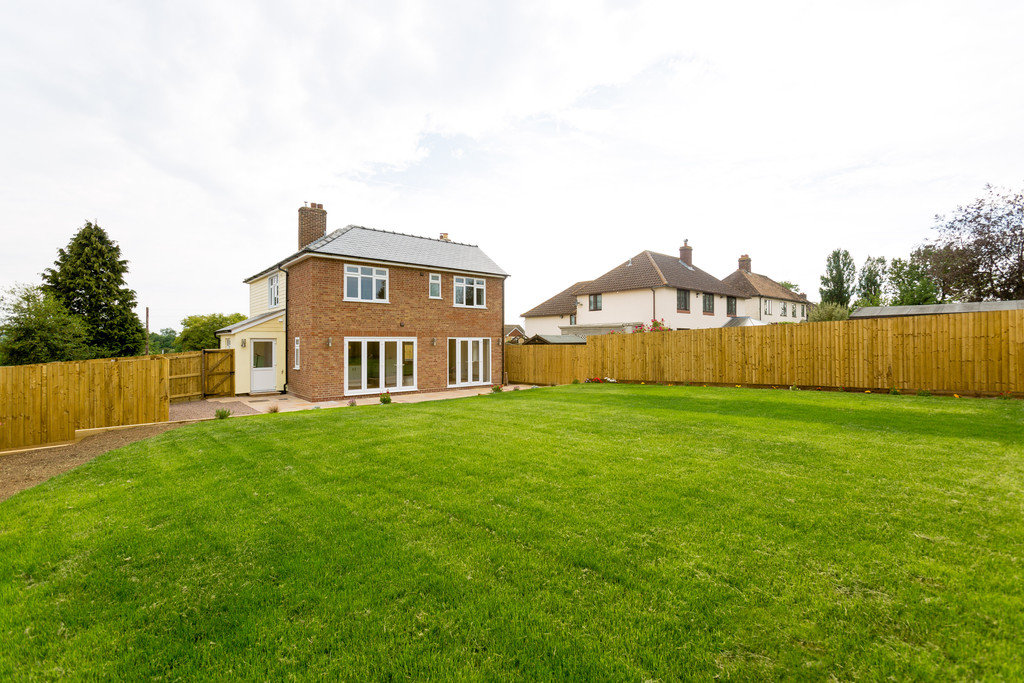
Our Caxton extension turned a traditional detached house into a much larger family home. It was a substantial double-storey build, with new red brick tied into the original walls under a pitched slate roof. Downstairs we added bifold doors and white UPVC French doors with matching sidelights, opening onto a large sandstone patio with retaining walls. There is also a single-storey side porch, new double-glazed casement windows and exterior wall lighting. We handled it from the foundations through to the landscaping, which is how we prefer to work: one team, start to finish, so you are not left chasing separate trades.
If you are weighing up something similar, our extensions page explains how we approach design and build, and our brickwork team is the reason new walls can sit comfortably alongside old ones.
Old houses on the main road
Caxton has 29 listed buildings, a lot for a village of under 600 people. Several are Grade II*, including The Crown House, Caxton Manor House, Caxton Hall and the parish church, and there are Grade II homes such as Red Lion Farmhouse, Manor Cottage, Milestone Cottage and the aptly named Thatched House. Beyond the village, three medieval moated sites survive at Caxton Moats, Caxton Pastures and Swansley. North of the village, the replica gallows at Caxton Gibbet still stands by the roundabout that took its name.
South Cambridgeshire District Council designated the Caxton Conservation Area in 1975, and it is the council you will deal with for planning. Conservation areas and listed buildings both restrict what you can do under permitted development, so before any work starts we advise checking with the council what consent you will need. If your house is listed, alterations inside can need consent too, not just changes you can see from the street.
Building on Caxton clay
The parish sits on clay with a blue gault subsoil, at roughly 44 to 68 metres above sea level. Clay ground moves as it wets and dries, so foundation design for an extension or garden building is something to take seriously here, particularly where there are established trees nearby. It is worth getting the ground considered early, alongside access from the road and how the new work will meet the existing house.
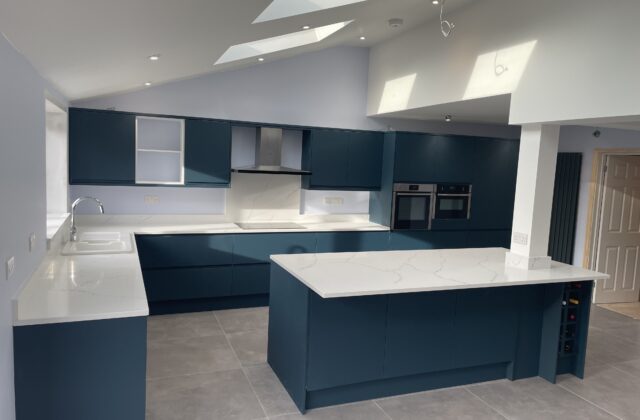
Not every job is a big one. Plenty of homes in and around Caxton need a loft conversion, a refitted kitchen or simply a reliable pair of hands for repairs, and we take those on with the same care.