Little Abington sits on the north bank of the River Granta, facing its larger neighbour across the water. The parish is small, about 1,309 acres, with the ancient Wool Street along its northern edge. Until the 20th century it was little more than a lane: the original settlement turned off the main street towards St Mary’s Church, whose nave is thought to date from around 1100 and which is built of field stones with ashlar dressings.
A village of two halves
The cottages at the centre
The heart of Little Abington is a group of timber-framed, thatched cottages. They belonged to the Hall estate until 1930, when they were sold, and in 1954 they were bought and renovated by the Cambridgeshire Cottage Improvement Society; two of them became a studio pottery. That earlier round of renovation is now 70 years old, and houses of this kind tend to need attention again in time: timbers that have shifted, older repairs that trap damp, and roof and joinery details that have worn out.
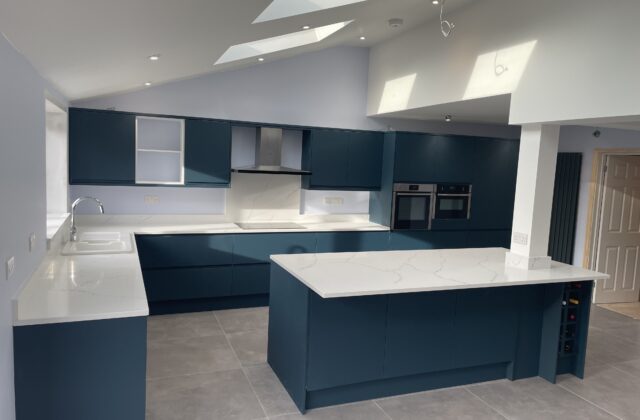
For work of this sort the starting point is understanding the frame. Our carpentry service covers structural timber repairs as well as new joinery, and our refurbishment work brings kitchens, bathrooms and services up to date inside without stripping out the character.
The Cambridge road and Bournbridge Road
The other half of the village is more recent. Around 45 larger houses in generous gardens were built along the Cambridge road and, in the 1960s, along Bournbridge Road to the north-east of the church. Between 1951 and 1971 the number of homes in the village rose from 85 to 130. These are the houses where owners most often want to add space, and with big gardens there is usually room to do it, whether that is a single-storey extension, a second storey over a garage, or a separate garden building.
Planning, river and ground
Little Abington is in South Cambridgeshire, and its historic core falls within the Great and Little Abington Conservation Area, first designated in 1972. Inside the boundary, and on any listed building, permitted development is more limited, so it is worth looking at the council’s boundary map early and getting their view on anything that changes the outside of a house.
The village used to be joined to Great Abington by a hump-backed bridge, probably late 19th century, which was bombed in 1940. Along the Granta itself the ground is alluvium and gravel, while the north of the parish has glacial gravels over chalk. If you are planning an extension near the river, it makes sense to check the flood map and the soil before settling the design.
Nearby projects
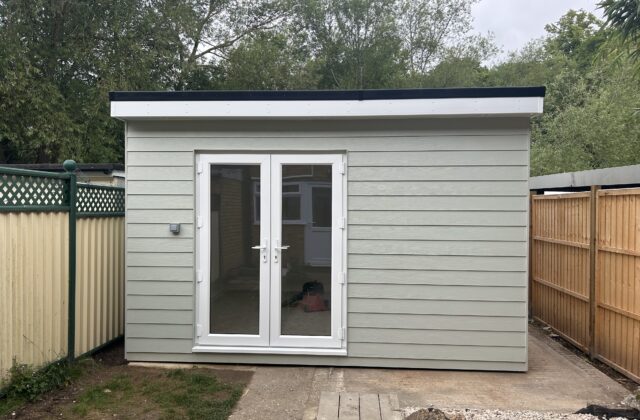
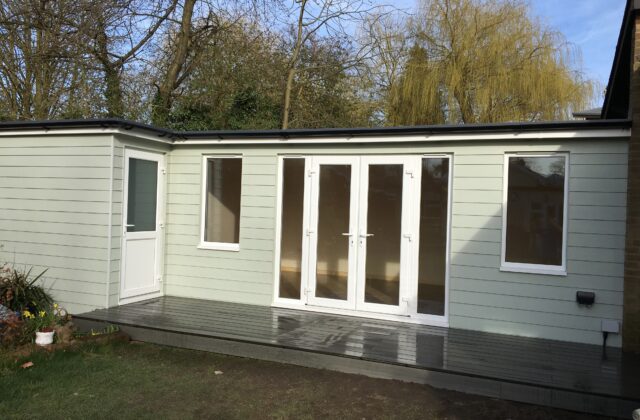
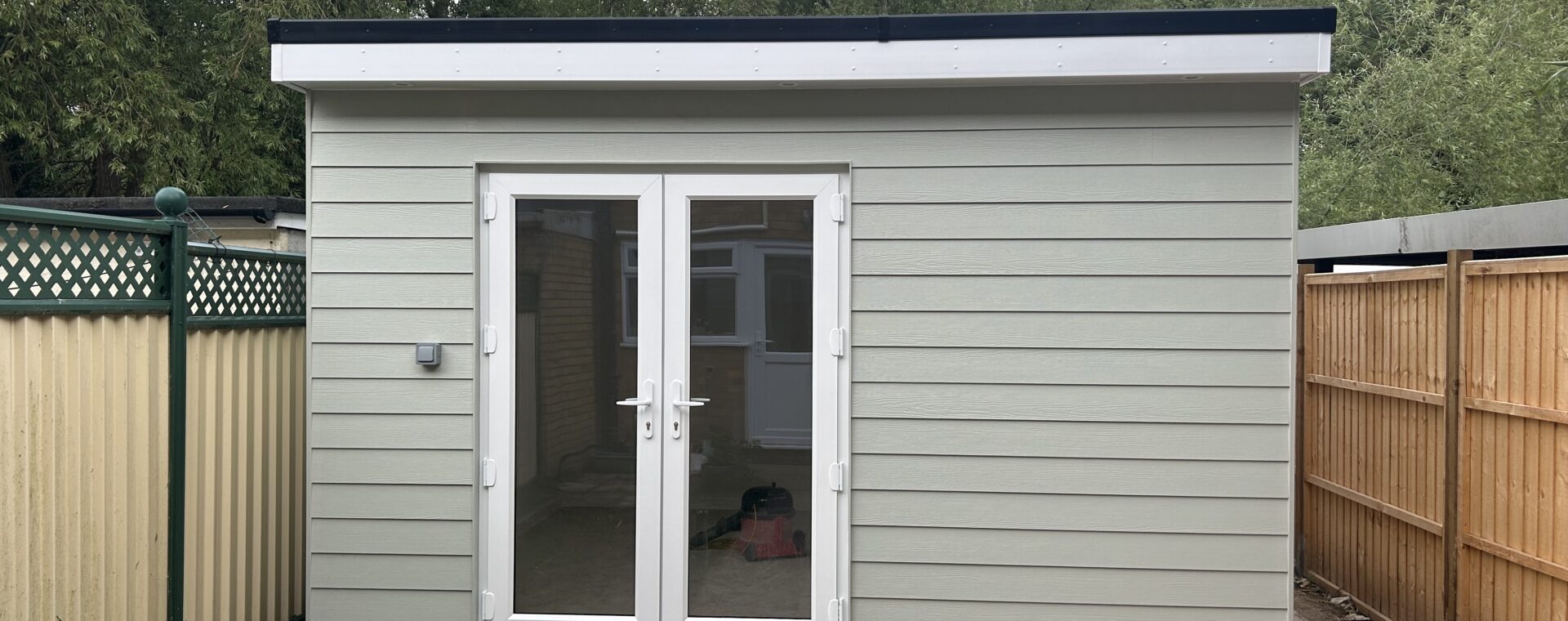
We don’t have a case study in Little Abington yet. The nearest are two garden rooms we built a few miles west, in Sawston and Shelford, both clad in Hardie board and each with its own separate garden store. A&F Building Services has been established since 1993, is fully insured, and handles a project from design to handover with its own team.