Most people know Duxford for its aircraft. The airfield beside the A505, about a mile west of the village, has been home to Imperial War Museum Duxford since 1977 and has 14 listed buildings of its own, including a 1917 hangar. The village is a different place altogether: two old streets, two medieval churches and a good number of timber-framed houses, with newer homes on either side.
Two streets, two churches
Duxford grew along two parallel roads, roughly 300 yards apart, that were strands of the Icknield Way heading for separate crossings of the Cam. Each became a community with its own manor and its own church, and both churches, St John’s and St Peter’s, are Grade I listed. St John’s was closed in 1874 when the two parishes were joined, and is now cared for by the Churches Conservation Trust. St Peter’s is built of flint and field stones with ashlar dressings.
What the older houses are like
The Victoria County History describes the old cottages as timber-framed and thatched, some with overhangs and some refronted in brick. Plenty survive. College Farmhouse, beside St John’s, is thought to have started life around 1500 as a guildhall; Old Laceys dates from the 16th century; and the John Barleycorn and the Plough are both thatched and listed. The conservation area around the centre holds 36 listed buildings across roughly 30 hectares.
Refronting in brick was common once, but on a listed house today alterations to the fabric, inside or out, can require consent. Repairs go better when they follow the original construction: timber for timber, lime for lime, and brick or flint matched where it shows. Our brickwork and flint and carpentry services are set up for that kind of repair.
Newer Duxford, and the river
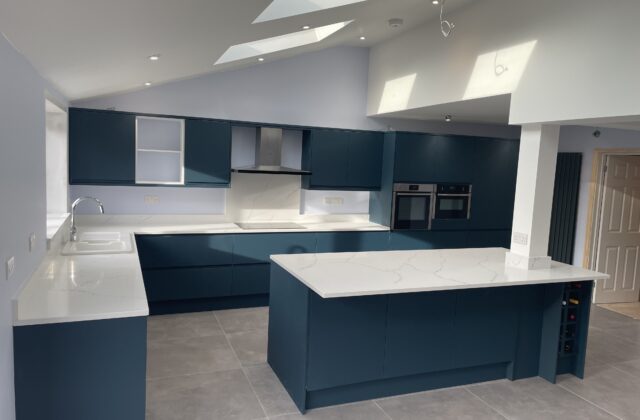
The village had 284 houses in 1951 and 369 ten years later, and most of the new estates, some council-built, were laid out north and south of the old village. By 2021 the population was about 2,200. Houses from those decades often suit a single-storey extension or a new kitchen, sometimes both at once.
The parish lies mainly over chalk, but a strip of alluvium and gravel follows the Cam, and the riverside meadows were historically liable to flood. Near St Peter’s, The Biggen, a small wood by the river, is a scheduled medieval moated site. If you live on the river side of the village, look at the flood map before drawing up any ground-floor work.
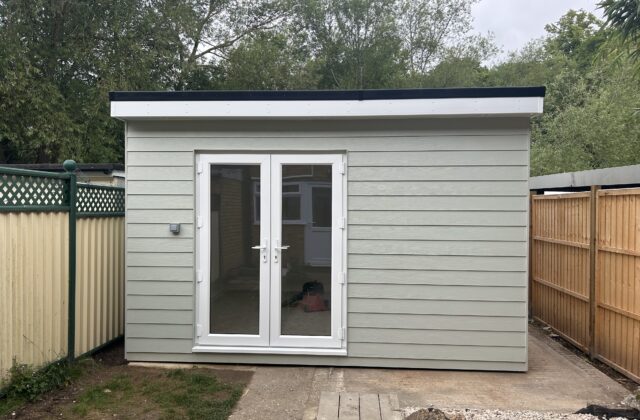
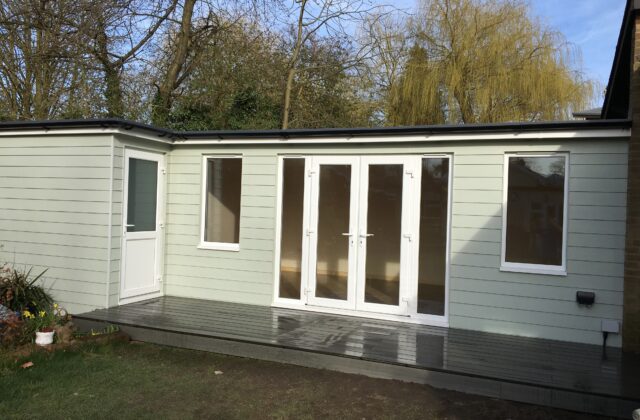
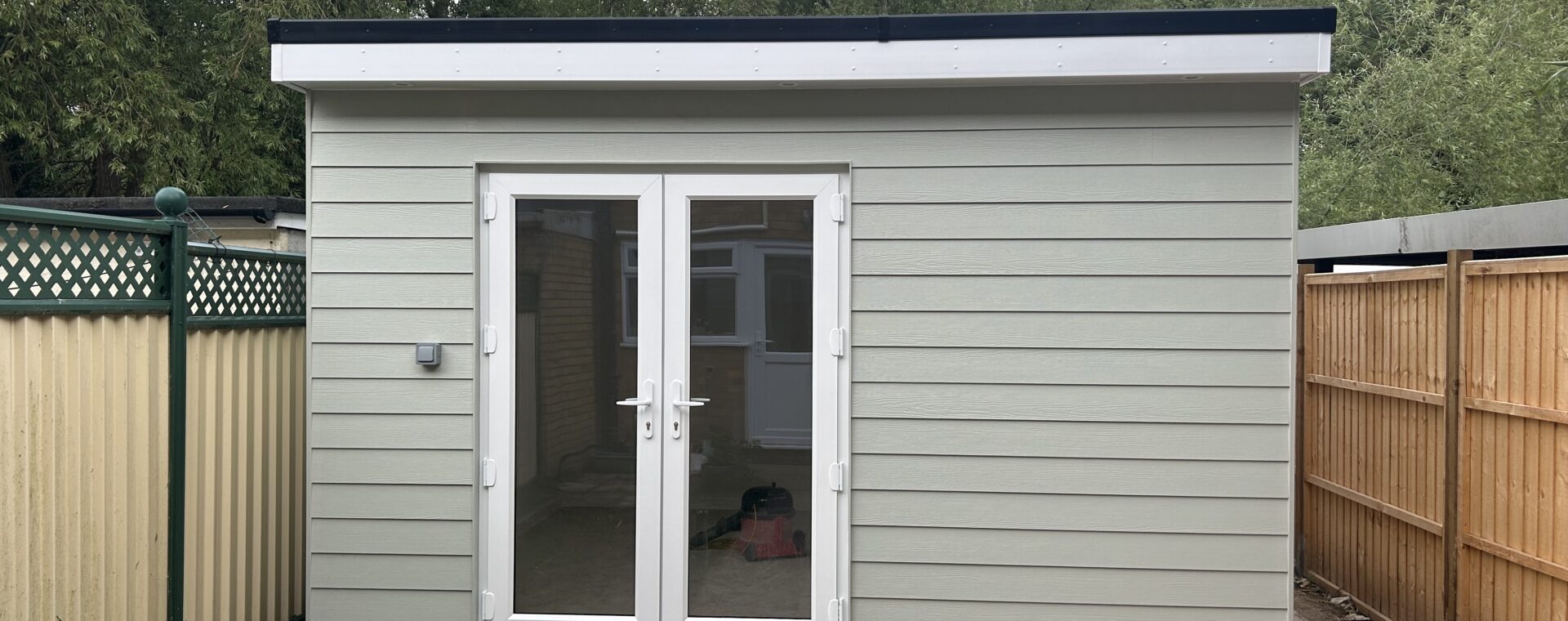
Planning in Duxford is handled by South Cambridgeshire District Council, and listing or conservation area status will narrow what is allowed without an application. A&F Building Services has no published Duxford project yet. The nearest is a fully insulated garden room in Sawston, just up the Cam, followed by an L-shaped garden room at Shelford.