Trumpington has been part of Cambridge since 1934, yet its conservation area appraisal still calls it the only village within the city. The old core sits three miles south of the centre, around the Church of St Mary and St Michael, which dates from about 1200 and holds the brass of Sir Roger de Trumpington, dated 1277. Around it are two manor houses, Trumpington Hall and Anstey Hall, and the Maris Piper potato, bred here, takes its name from Maris Lane. Since Cambridge’s 2006 Local Plan released Green Belt land on the southern fringe, though, whole new neighbourhoods have grown up at Trumpington Meadows to the south-west and at Clay Farm and Glebe Farm to the south and east. The 2021 census counted 12,393 residents.
The old village and its conservation area
The Trumpington Conservation Area was designated in 1969, extended in 1998 and 2010, and reviewed again in a new appraisal adopted in February 2026. It runs along the High Street, Church Lane, Maris Lane and Grantchester Road. The appraisal records a mix that spans five centuries: the 15th-century Green Man, timber-framed and rendered under a plain tile roof; 18th-century cottages at 22 to 26 High Street, one and a half storeys of red brick under thatch; an early 19th-century toll house of gault brick with a hipped slate roof; and groups of Victorian and Edwardian gault brick cottages, enlivened by dormers, gables and chimneys. Some of the older cottages on the west side of the High Street now sit well below the road, which has been built up over the centuries.
The appraisal also notes that many houses still have their original details and raises the possibility of an Article 4 direction covering windows, doors and boundary walls. If you own one of these houses, careful joinery repairs and matching brickwork are usually the right way to keep it in shape, and any outside alteration is worth discussing with the planners first.
Victorian terraces off the High Street
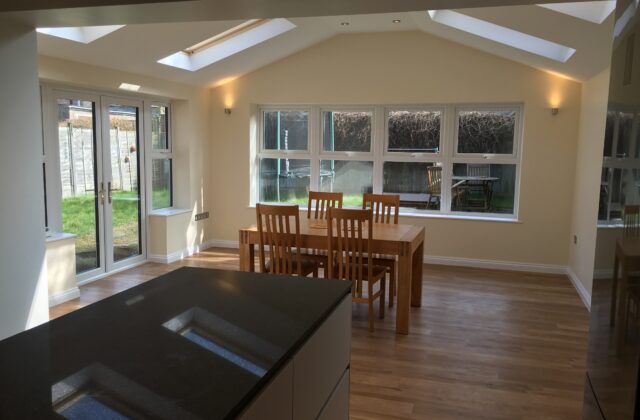
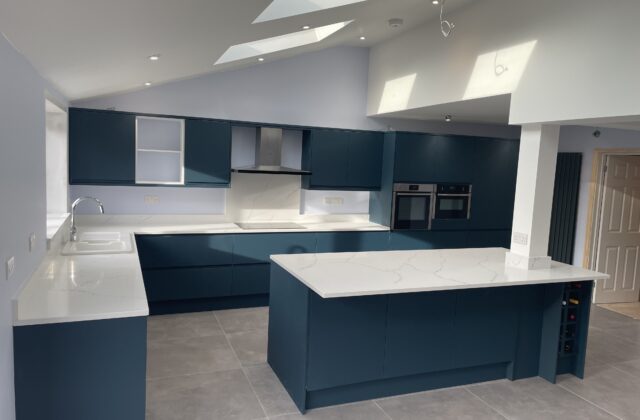
At the northern end of the village, Alpha Terrace is made up mostly of speculatively built two-storey Victorian and Edwardian terraces, built in rows with alleys between them. Further south, 109 to 119 High Street and 1 to 27 Shelford Road are a similar group, set behind small front gardens with single or double-storey bay windows. These are the houses where a rear extension to widen the kitchen, or a loft conversion for an extra bedroom, tends to make the most difference.
Which council deals with your application?
Most of Trumpington is in Cambridge City Council’s area. The exception is in the south-west: the Trumpington Meadows development of 1,200 homes straddles the boundary with South Cambridgeshire, so outline permission in 2009 came from both councils, and since 2017 the most southerly part has fallen in the new civil parish of South Trumpington. Both councils now work through the Greater Cambridge Shared Planning Service, but the authority named on your decision depends on which side of the line your house is.
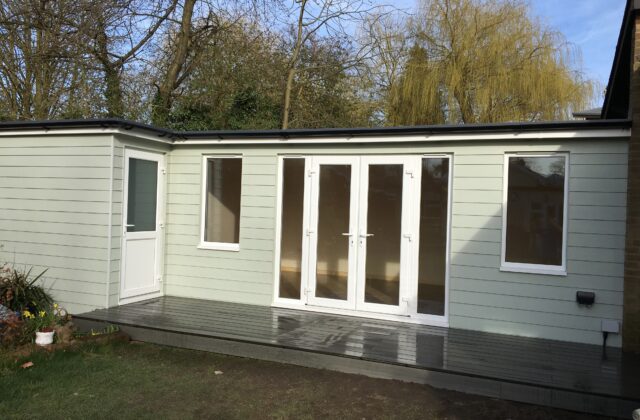
Trumpington homeowners can expect a fully insured firm with roots going back to 1993. Our nearest case study is a large L-shaped garden room with a raised composite deck just down the road in Shelford, and we have also built extensions in Cambridge and Cherry Hinton. Design, construction and finishing all stay with the same team throughout.