Saffron Walden sits in the north-west corner of Essex, about 15 miles south of Cambridge, and building here is its own particular job. Uttlesford District Council’s 2018 appraisal counts around 320 listed buildings or groups inside the town’s conservation area, and an Essex County Council study quoted in it calls Saffron Walden’s timber-framed buildings the finest surviving collection in the county.
A market town that kept its frames
The town grew rich on the saffron crocus, grown here for dye in the late medieval period, and on the East Anglian wool trade. That money built the houses that still line Castle Street, Church Street, Bridge Street and Market Hill. Of the listed buildings in the conservation area, 9% date from the 15th century and 22% from the 16th, while the biggest single group, about 45%, are 19th century. Six are Grade I, among them the castle remains, St Mary’s Church, whose spire is the tallest in Essex, and 29 to 31 Church Street, once part of the Sun Inn, timber-framed and plastered with elaborate late 17th-century pargetting.
Many early buildings were given brick fronts in later centuries, so a plain Georgian or Victorian facade can hide a much older frame. It is wise to treat any old wall as an unknown until it has been opened up with care.
The materials Uttlesford looks for
The appraisal sets out the town’s palette. Walls are timber frame and brick, exposed or rendered, with render traditionally smooth and lime-based. Red brick appears alongside yellow stock and gault, sometimes together for quoins and window surrounds. Flint with brick and lime mortar is widespread in boundary walls. Roofs are steep, in clay peg tile on older buildings and natural slate on most 19th-century ones, with a little thatch, and over 30 walls, railings and similar structures are listed in their own right.
The same document singles out badly chosen replacement windows as a common source of harm to unlisted historic houses, and supports Article 4 Directions to protect original windows where that is justified. That is where our brickwork and flint walls and carpentry services earn their keep: matching a gault brick, rebuilding a flint wall in lime, or making a timber window to the original pattern.
Planning on the Essex side of the line
Because the town is in Essex, applications go to Uttlesford District Council rather than a Cambridgeshire authority. The conservation area was first designated in 1968 and revised in 1991. Most of it lies in the Slade valley, with sloping streets that rise towards the church. Beyond the old centre the town grew considerably during the 20th century, and those later homes are generally simpler ground for an extension or a loft conversion. Wherever you live in the town, establish whether the house is listed or within the conservation area before a design is settled, as either one narrows what can be done without consent.
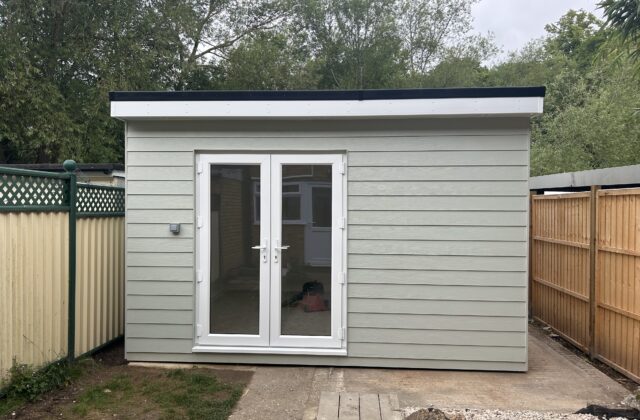
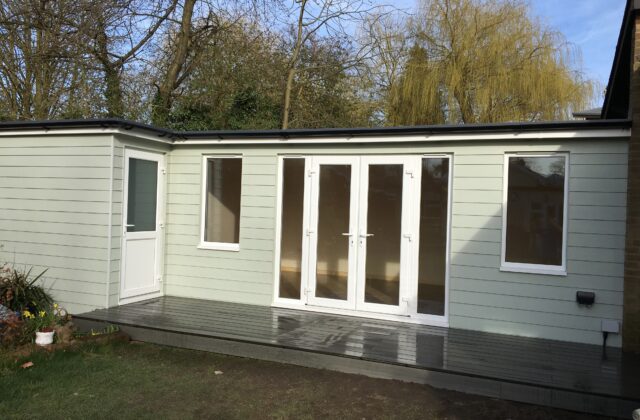
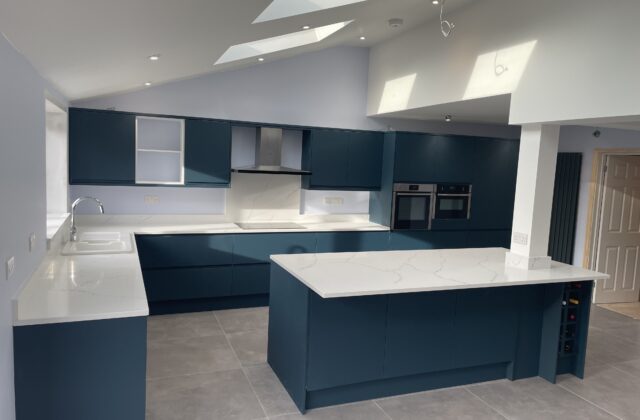
None of our published projects is in Saffron Walden. The nearest are garden rooms in Sawston and Shelford and a large rear extension in Cherry Hinton, which gives a good idea of how A&F Building Services approaches structural work and finishes.