Milton is a village that changed fast. It had 285 houses in 1961, 580 by 1971, and in the 1980s two large estates went up between the new bypass and the old village, roughly doubling the population within ten years. Today around 4,400 people live here, with the Science Park, Cambridge North station and Milton Country Park all inside or on the edge of the parish. So for A&F Building Services, Milton is mostly a village of family homes from the last sixty years, with a smaller but important group of older buildings near the church.
Getting more from a 1970s or 80s house
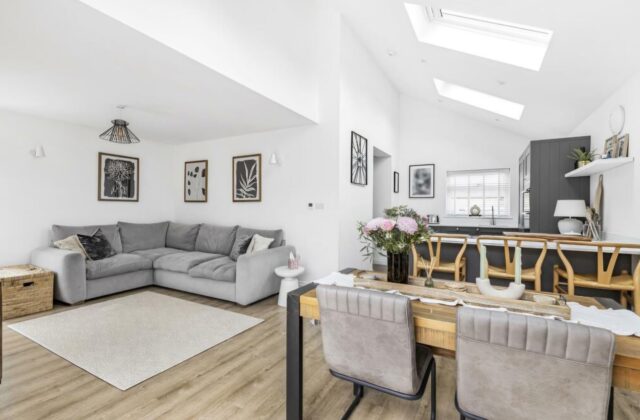
Plenty of homes from that era were planned for the way families lived then, often with a separate kitchen, a small dining room and sometimes an integral garage. Common ways to rework them include:
- a single-storey rear extension that opens the kitchen to the garden
- a garage conversion for a study, playroom or ground-floor bedroom
- a loft conversion, where the roof pitch and height allow
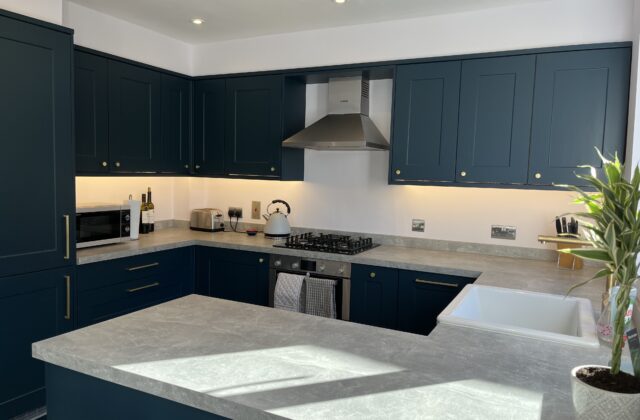
- a new kitchen laid out around how you actually cook
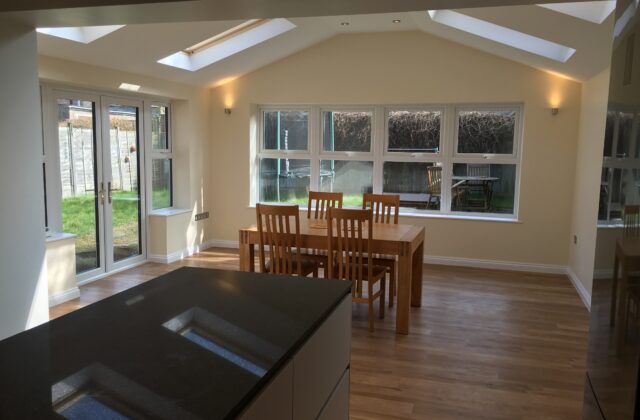
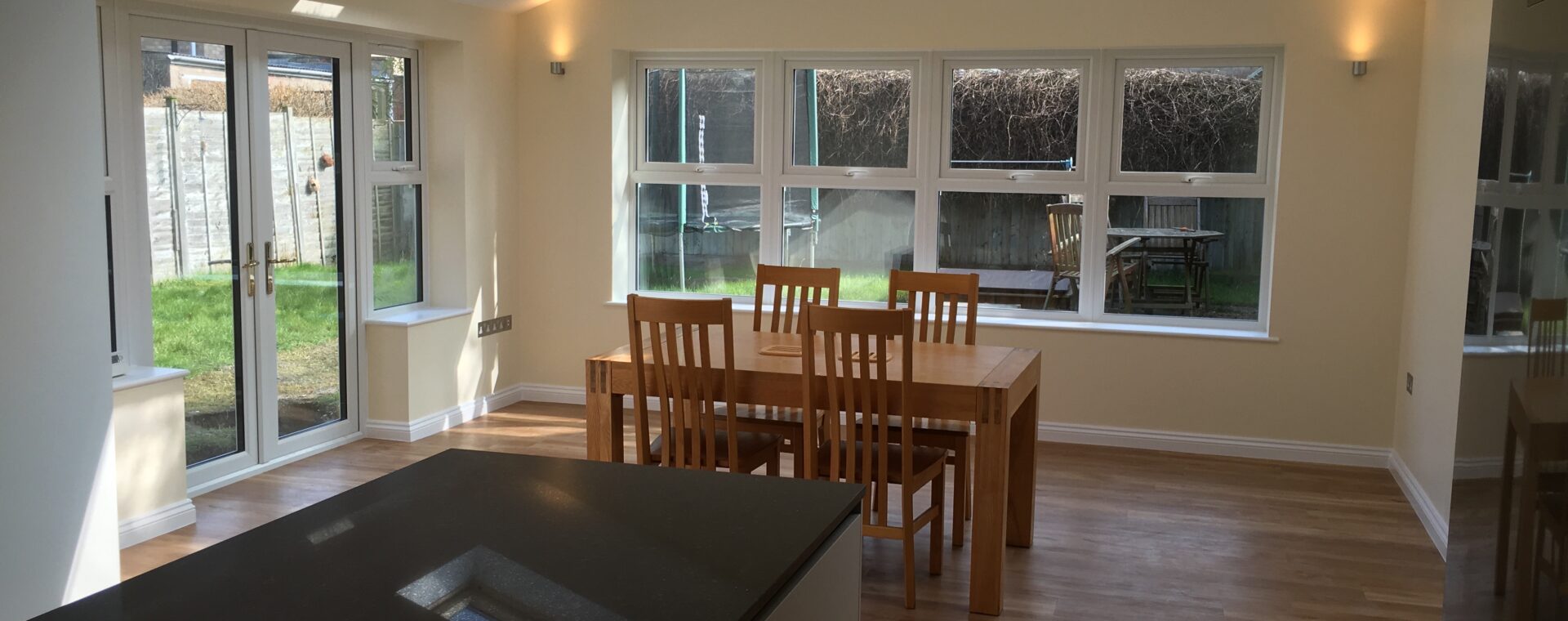
For a sense of what an open-plan extension can look like, our Cambridge extension and kitchen pairs a gabled single-storey addition with an island kitchen. Some newer estates carry planning conditions of their own, so check what applies to your road before the design is settled.
The old village by the church and the hall
Before the estates, Milton grew around a small triangular green, with Fen Road leading past what became Fen End down to the Cam at Baits Bite Lock, and Church Lane running north-east to the church and hall. A great fire in 1735 took many of the older houses, so most of what survives from before 1900 is plain grey-brick 19th century cottages and farmhouses.
A few older and grander buildings stand out. All Saints’ church, with its Norman chancel arch, is Grade II* listed. Milton Hall on Church Lane was built around 1772 for the Reverend Dr Knight, a canon of Ely, in gault brick with stone dressings. On Fen Road, Queen Anne’s Lodge is a 17th century timber-framed, plastered cottage decorated with pargetted panels and iron masks. The area around the church and hall has been a conservation area since 1981, and the riverside at Baits Bite Lock is covered by a separate one shared with Fen Ditton.
Flat land, gravel and the river
The parish is almost completely flat, below 10 metres, with the Cam along its eastern side. The Victoria County History describes gault clay underneath, alluvium along the river bank and gravels further west. Those gravels were dug for years before the pits were landscaped to create Milton Country Park, opened in 1993. On a building plot, that variety means ground conditions can differ from one side of the village to the other.
Planning in Milton is handled by South Cambridgeshire District Council. A&F has been building since 1993, is fully insured, and our own team takes a project from the first drawings to the last coat of paint.