Snailwell is small, fewer than 200 people at the 2011 census, and it owes its name to water: the River Snail rises from a spring in the north-west of the parish and forms its northern boundary with Fordham. The village sits below a ridge about 30 metres high, roughly four kilometres north of Newmarket, and horses are never far away. Snailwell Stud has been a public stud of national importance since 1946, and by the 1990s around a third of the parish’s land was given over to racing.
A round tower and a thatched cottage
St Peter’s Church has a round Norman tower, one of only two in Cambridgeshire, built of flint with limestone dressings and listed Grade II*. Around it, the oldest homes are Church Farm, its tithe barn and two of its tied cottages, all from the late 16th and 17th centuries. Number 6 The Street is a late 17th-century timber-framed cottage, plastered and thatched, with a brick stack that may have been rebuilt in 1781. The Old Rectory and its garden wall are also Grade II*, and the parish has ten listed buildings in all.
Snailwell has been a conservation area since 1991. With so few houses and so much of the old village protected, East Cambridgeshire District Council should hear about plans for any older property here before the design is settled. Timber frames and thatch also call for a gentle hand with carpentry and maintenance.
The council houses on the Green
In 1951 and 1952 Newmarket Rural District Council built 16 houses here, 12 of them bungalows, and the heart of the village shifted from the lower green to the top green, now simply called the Green. By 1991 there were 22 detached houses, 44 semis and 11 terraced homes. Bungalows and semis from that period are often a good fit for a modest extension or a new bathroom.
A&F nearby
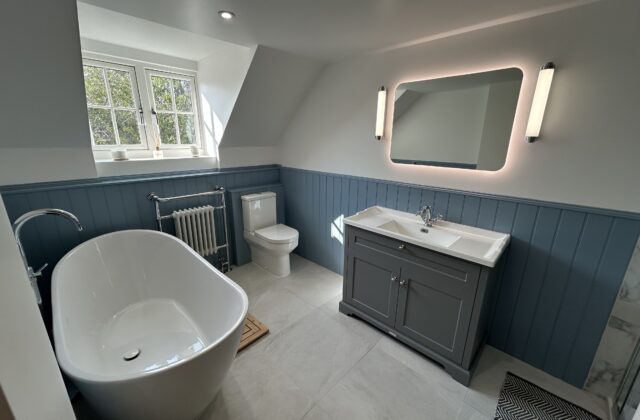
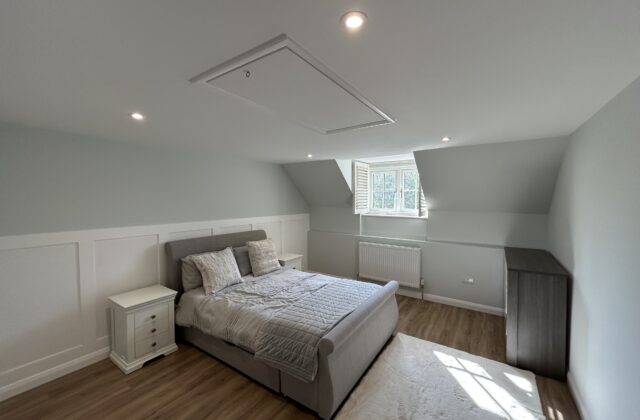
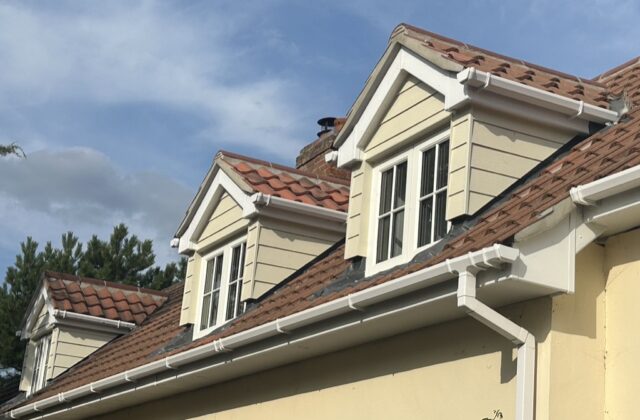
A&F Building Services has been working since 1993 and is fully insured. We plan and build with our own team. We have no case study in Snailwell, but three of our projects are in Newmarket, a short drive south: a dormer, a bathroom and a bedroom refurbishment.