Mildenhall stands where two landscapes meet. To the south and west the land drops away into flat fen; to the east are the sandy, pine-lined fields and forests of Breckland. The River Lark runs along the southern edge of the town, and the tower of St Mary’s Church, Grade I listed, can be seen for miles across the fen.
The old town around the market
The historic centre follows a medieval plan, linking the old manor, the market place, the churchyard and the river. In the market place a late medieval timber market cross and a 19th century pump stand among buildings mostly put up in the 16th century. The conservation area, first designated on 19 October 1973, covers about 30 hectares of this core.
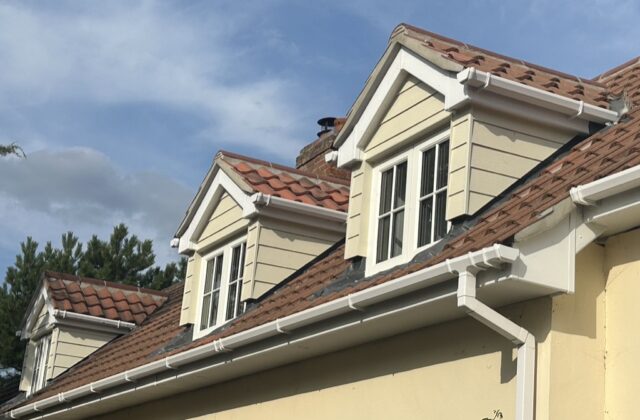
West Suffolk’s appraisal lists the materials you see: rendered timber frame, red brick and gault brick for walls; plain tiles, pantiles and slate for roofs. It also picks out the town’s old boundary walls in brick, clunch block and flint rubble as important survivals. Most buildings are two storeys and one room deep. The Hanmer almshouses mix gault brick, flint and red brick under black pantiles, and several houses on Church Walk and Manor Road are built of knapped flint.
If you own one of these, work tends to be repair led: replacing rotten timber, repointing, sorting out roofs and chimneys, then a sympathetic refit inside. Our property maintenance and brickwork and flint walls pages explain how we approach it.
A town that grew outwards
Mildenhall expanded in the 19th century, and then much more in the second half of the 20th, when London overspill housing was built to the north and east. RAF Mildenhall, opened in 1934 and now home to United States Air Force units, sits to the north west. More is on the way: a large site within the town is allocated for around 1,300 homes alongside schools, a local centre and employment land.
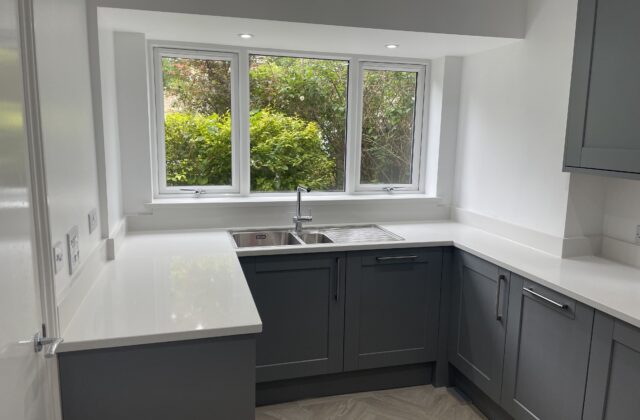
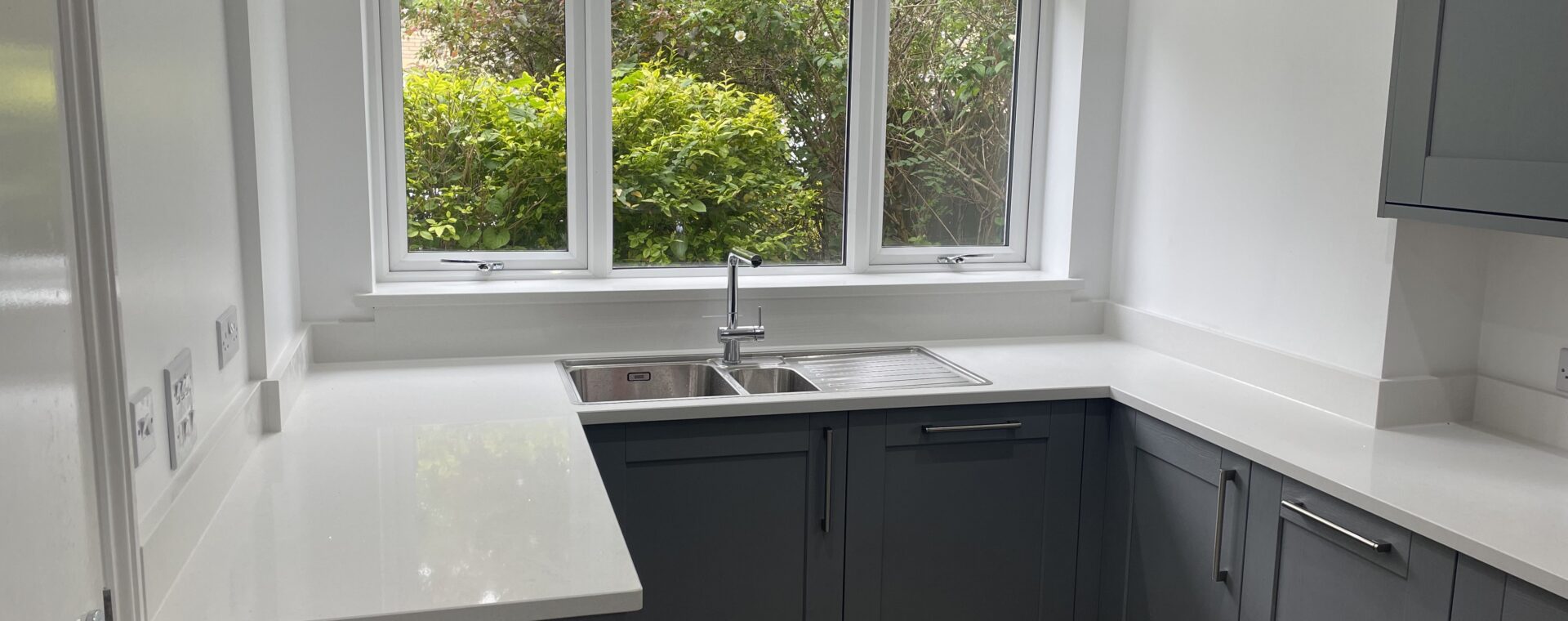
Those post-war and newer homes are where most extension work happens. A single-storey rear extension, a new kitchen or a bathroom refit can change how a 1960s or 70s house works without moving.
Planning and who to talk to
Mildenhall is in West Suffolk, so applications go to West Suffolk Council. Inside the conservation area, and for any listed building, controls are stricter, so share your plans with the council before you commit to them.
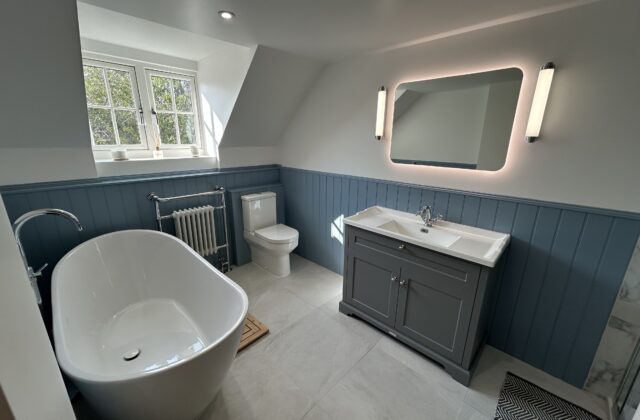
A&F Building Services, a family firm founded in 1993, has no Mildenhall project among our case studies, but our nearest finished jobs are in Soham and Newmarket. In Newmarket we refurbished a family bathroom around a standalone oval tub, with grey large-format floor tiles and a dark grey vanity unit. We run each job ourselves, from design to the trades on site, and are fully insured.