Dalham is small, with 210 people at the 2011 census, but it packs in a remarkable amount of history. Its conservation area, first designated on 21 December 1973, covers around 66 hectares and holds 41 listed buildings. In a village of this size, that means a good chance that any older house you own here is protected.
An estate village beside the Kennet
The village grew up south of the manor along the River Kennet, which the street follows for most of its length, in a narrow valley cut into rolling chalk country. Front gardens are reached across little footbridges with white painted timber rails. On the high ground stand three landmarks: St Mary’s Church, Grade I listed; Dalham Hall, rebuilt after Simon Patrick, Bishop of Ely, bought the estate in 1702; and Lower Mill, a smock mill on a tarred brick base, built around 1790 and worked until 1926.
Cecil Rhodes bought the estate at the turn of the 20th century but died in 1902, and his brother built the village hall in his memory. The estate is still a significant landowner, and the village has changed only slowly. The parish also takes in the hamlet of Dunstall Green, and the Icknield Way Path enters the village at Beech Row and leaves by Stores Hill, so the path runs right through the village.
What Dalham houses are made of
The appraisal sums up the village character in two materials: flint for walls and thatch for roofs. Many cottages are timber framed, infilled with wattle and daub and finished in lime-based render, and 1 Lidgate Road still has its original pargetting. The local brick is a warm red, soft brick laid in white lime mortar. Roofs mix straw and reed thatch, handmade clay peg tiles on steep pitches, and red or black glazed pantiles on shallower ones.
The council’s own guidance for the village is practical: avoid hard cement renders on timber frames, and repoint old brick and flint rather than rendering over it. We agree. Hard cement traps moisture in soft brick and old timber and causes the decay it was meant to prevent. Our brickwork and flint walls service and property maintenance work are built around repairs like these.
Planning here
Dalham is in West Suffolk, so West Suffolk Council handles planning and listed building consent. With so much of the village protected, most visible changes need careful handling, and even internal work can need consent in a listed house. Agree the approach with the council first, then build. For a project that touches the structure of a listed cottage, a short written description of the proposed repairs and materials helps the conversation along.
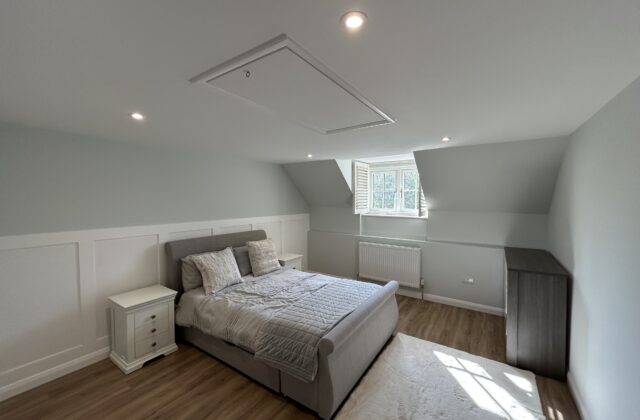
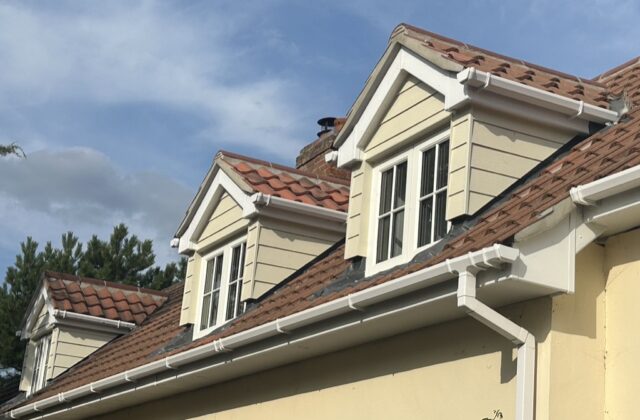
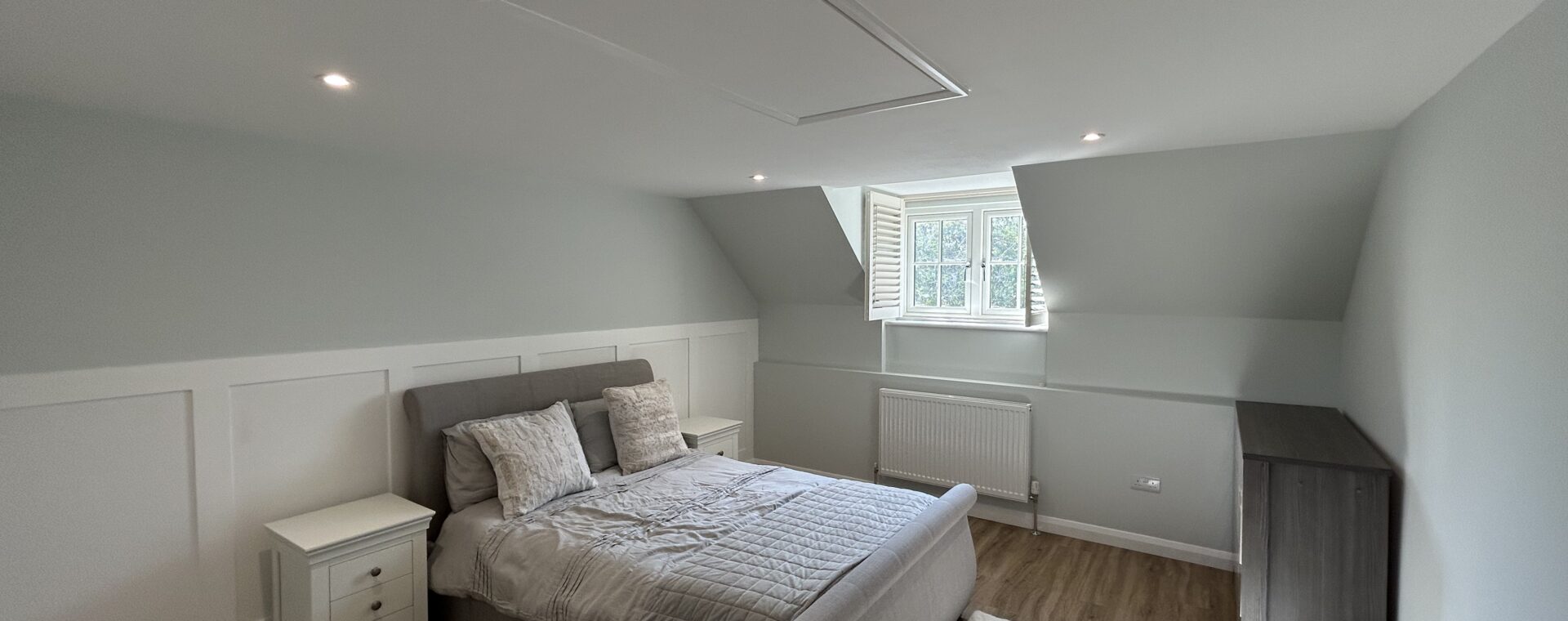
A&F Building Services, a family business founded in 1993, takes on that kind of work around Newmarket and its villages. Our nearest finished project, in Newmarket, is a dormer bedroom with bespoke wall panelling and shutters; our carpentry page explains more.